
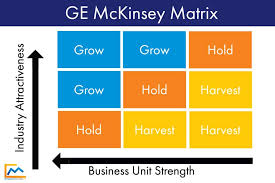
The GE/McKinsey matrix is a classic strategy framework … gone bad. Initially thought to be a radical innovation, it guided flawed corporate diversification strategies of the 1980s. Indeed, it is still sometimes taught in business schools, and some consultants still sell this analysis as a service. My first intuition is to ignore it in class. Indeed, I’ve not discussed this framework in class since posting a collection of exercises from the late 1990s here where the data reflected the Sears Financial Network.
However, showing the framework’s flaws can help students to see what they should be looking for when analyzing diversification strategies. Brian Silverman suggested that we update the exercise so students would evaluate a disguised version of Disney’s portfolio using the tool. Without context, the studio and video game divisions appear to be “dogs” to be divested, and the theme parks seem to be stars. The relationship between the units is opaque. Once the company and divisions are revealed, it becomes apparent that the links between businesses are absolutely critical. Of course, the theme parks are especially valuable because they can leverage creative output from the studios.
Since my class is partially online, I created this Google sheet to facilitate the exercise that will accommodate up to 12 student teams. It would also prove useful in a large in-person class. Here’s how it works:
Continue reading




 The
The  I like to start the semester with a “ripped from the headlines” case. This is especially helpful if some of one’s cases are older. This semester, Zoom is a great alternative. The current
 How can we make online courses more interactive? Often people create videos of their PPT lectures as the basis of an online course. We know we can do better. It turns out that negotiation exercises can work surprisingly well online. My
  Firms often make errors in selecting governance forms and the scope of the firm. This is one common reason firms must undergo painful periodic restructuring programs. If only managers could frame these problems more effectively and identify the key factors to make more informed decisions — in short, a primer on Transaction Cost Economics (TCE). Brian Silverman provides just that tool in a
  Much of the news focuses on how hard businesses have been hit by the pandemic. However, strategy is about finding opportunities and adapting in a dynamic environment. Let’s not forget to focus on inspirational examples along these lines. Send students on a scavenger hunt (like the
 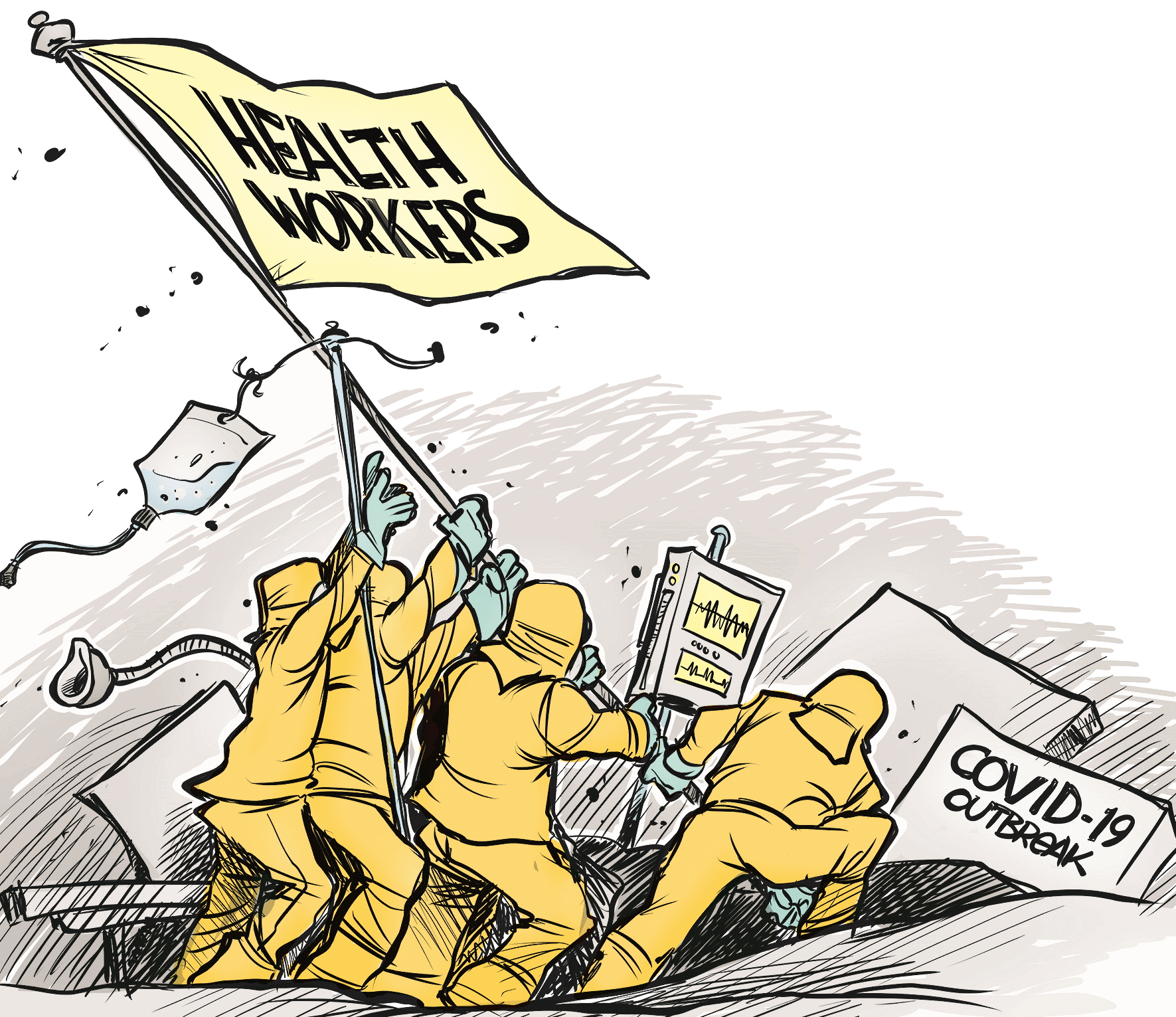 I have taught during numerous crises (various wars, 911, 2008 crash, etc.) and always regretted missing opportunities to bring the events into the classroom. So how can we encourage our students to think strategically about the COVID crisis? Here are a few ideas for discussion or team projects (but
  Theory is, by definition, a simplification of reality. A useful theory is parsimonious in that it reflects the most important details of the context and allows for reasonably accurate predictions (see a
 Human capital is often considered to be a critical component of valuable capabilities. However, it is intimately tied to value capture in that one might anticipate that those who have valuable and rare skills might also be in a position to appropriate rent. Is it a competitive advantage if the resulting value does not flow to shareholders? The following survey gets at this question and may spur interesting discussion among academics and students alike.
 Carpenter Strategy Toolbox